
Contributing Factors in Spring’s Evolution & Landscape Strategy
Here in North Texas, spring is a season of curious contrast—an elegant tension between abundance and restraint. In the span of a single week, skies may deliver torrential rain, only to yield to long stretches of sun and wind. Spring has played host to extremes from sudden snowstorms and near triple digits. For those of us who design and care for landscapes across DFW, this variability is not new—but its intensity and timing are becoming more pronounced, demanding a more thoughtful, proactive approach. Wade through the variables that contribute to our Dallas spring weather evolution and how it plays into our landscape strategy.
A Season Defined by Extremes
Dallas spring weather is historically the wettest and most dynamic time of year. Frequent thunderstorms often deliver heavy rainfall in short bursts, while temperatures typically remain mild and inviting. Dallas–Fort Worth experiences most of its precipitation through these storm systems, with lightning, hail, and occasional severe weather punctuating the rhythm of the season. Yet this abundance is uneven. The past few years have illustrated a pattern of oscillation—periods of above-normal rainfall followed by extended dryness. But, in between all the landscape nourishment, we capitalize on the mild, dry weather to enjoy limited alfresco dining time.
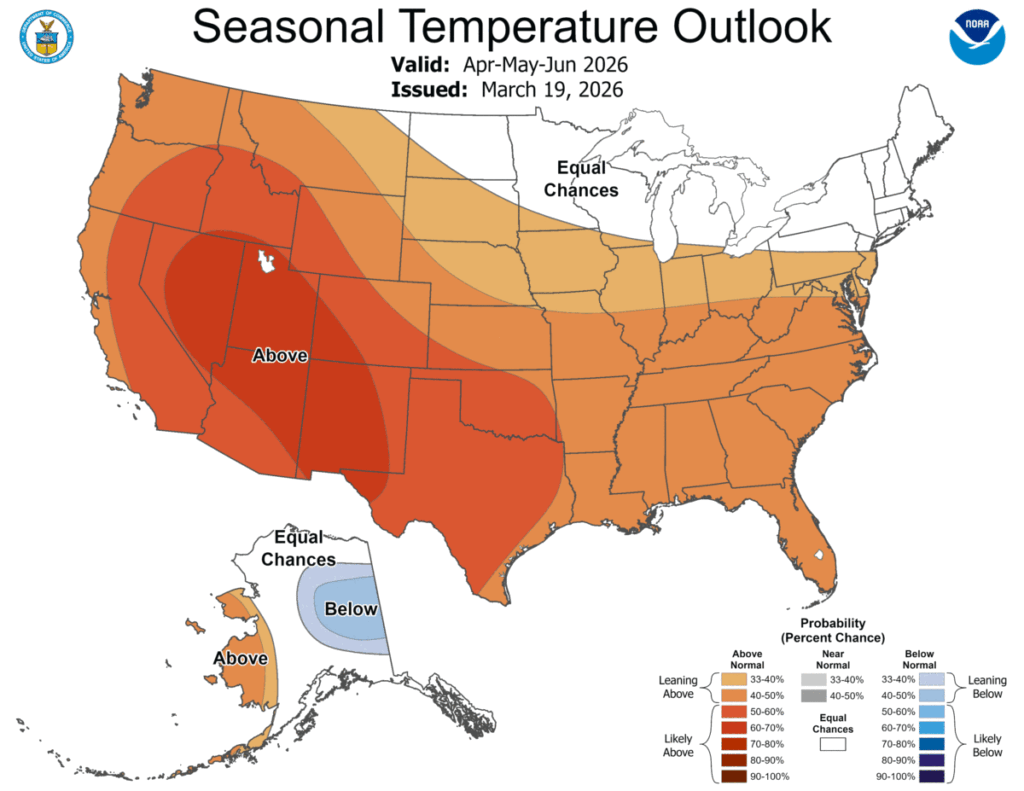
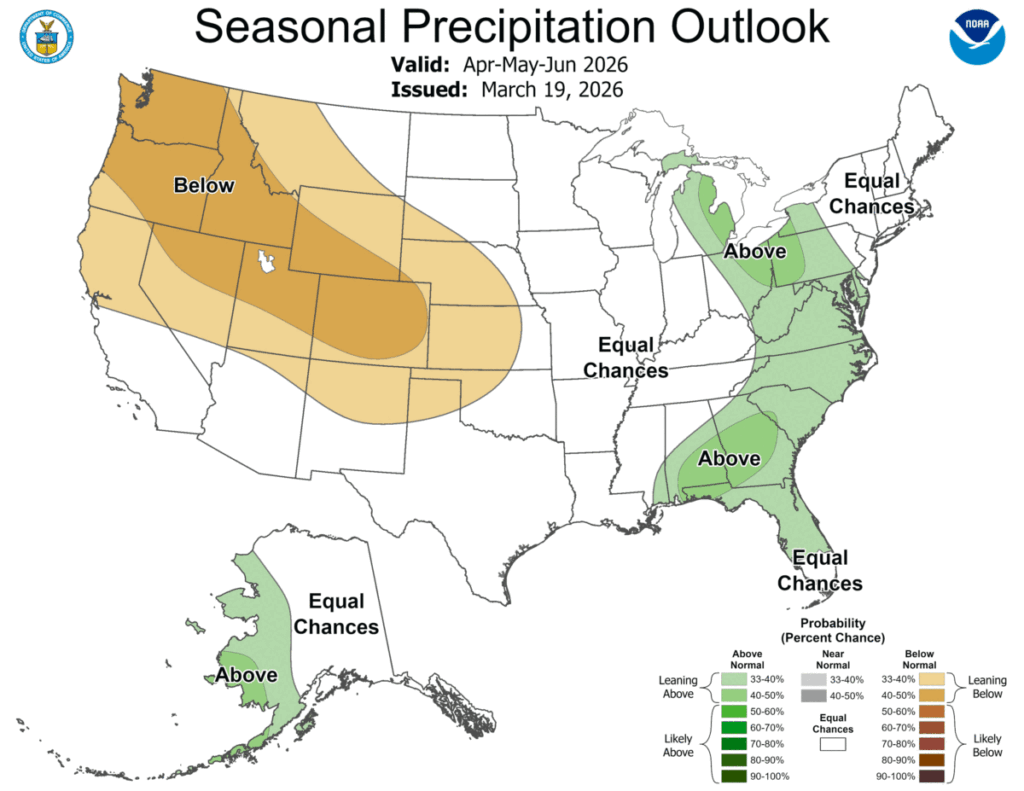
So far, Dallas has experienced a slightly arid start, accented by intense, record-breaking daily rainfall. As of April 10, 2026, we have recorded approximately 2.59 inches of rainfall, splashing just short of average. While early 2026 data shows Dallas County ranking among the drier years on record to date, thankfully, this past month has produced encouraging rainfall to resurrect our lush greenery. Although weather forecasters are split on how 2026 will turn out, some, like The Old Farmer’s Almanac, point to warmer conditions and potential for higher-than-average rain in May.

Understanding Drought—And Its Place in North Texas
A striking counterpart to heavy rain is drought. In its simplest definition, drought is a prolonged period of low precipitation resulting in water shortage. This cascading condition affects soil moisture, plant health, reservoir levels, and municipal supply.
While intermittent drought is common in Dallas, long-term drought is historically rare compared to other regions of Texas. Fortunately, Dallas benefits from periodic Gulf moisture and storm systems that help recalibrate conditions. Still, employing a landscape company that understands how to develop and maintain a drought-tolerant landscape is ideal for our unpredictable conditions.
A Stress Test for Landscapes
For plant material, the challenge is not simply too little or too much water, but the rapid transition between the two. In essence, Dallas does not lack water—it lacks consistency.
- Heavy spring rains can saturate soils, depriving roots of oxygen and promoting disease.
- Extended dry intervals that follow can stress plants already weakened by excess moisture.
- Compacted urban soils exacerbate both conditions, limiting drainage during storms and water retention during drought.
This cycle, often described as feast or famine, is particularly hard on ornamental landscapes, turf systems, and newly established plantings. Luckily, our garden managers oversee every aspect of care, ensuring that your landscape receives the proper amount of water during unpredictable weather seasons.

The Reservoir Network: Hidden Infrastructure Beneath the Landscape
Dallas’ water is not local—it is orchestrated. Unlike regions shaped by natural lakes or magnificent meandering river systems, our North Texas water story has long been written in reservoirs. Our water supply relies upon these carefully engineered constructions, which comprise a network that extends far beyond the immediate footprint of the city.
These man-made lakes, such as White Rock Lake and Cedar Creek Reservoir, were engineered to capture and store seasonal rainfall and stabilize our water supply. However, we don’t obtain our water from a single source. Like your diversified investments, the Dallas Metroplex draws from a distributed portfolio of reservoirs. Each, in turn, contributes to a larger, interconnected system. What emerges is a coordinated hydrological system that relies equally on geography, engineering, and timing.
Why New Reservoirs Are No Longer the Default Solution
Most of North Texas’s major reservoirs were constructed in the mid-20th century, during a period when land was more accessible, regulations were less complex, and the urgency of water security was already well understood.
Today, that model is far more difficult to replicate due to several factors:
- Viable sites are limited; the most strategic river basins have already been developed.
- Environmental considerations now shape every project, extending timelines and complexity.
- Urban expansion has made land acquisition significantly more challenging.
- Evaporation rates from Texas heat reduce the long-term efficiency of large, open-water storage.
Rather than building new reservoirs at scale, water strategy is shifting toward optimization—moving water more efficiently, reducing loss, and managing demand with greater precision.
Optimizing Water Management Within Residential Landscapes
Enlisting the experienced knowledge of a landscape professional to assist with water management is crucial to the success of a healthy landscape. Trained garden care specialists understand that supply is not simply a function of how much rain falls—it is a function of how well that water is captured, stored, and conserved.
Short, heavy storms—common in Dallas—often produce rapid runoff, overwhelming drainage systems and limiting how much water actually reaches reservoirs. Conversely, extended dry periods steadily draw down stored supply, placing pressure on municipalities and, ultimately, on irrigation practices.
This dynamic—abundance followed by restraint—mirrors what happens at the landscape level.
Designing for Resilience: The Role of Landscape Strategy
To solve the byproducts of our bipolar weather, we rely upon proactive planning to dramatically improve landscape performance across seasons.
1. Intelligent Irrigation
Modern irrigation systems must respond to variability, not just schedules.
- Soil moisture sensors and weather-based controllers prevent overwatering during wet cycles.
- Zoned irrigation allows high-value plantings to receive tailored care.
- Drip systems reduce evaporation and improve efficiency.
2. Thoughtful Drainage Design
Excess water is as damaging as drought.
- Subsurface drainage and grading protect root zones during heavy rains.
- Dry creek beds and bioswales manage runoff while adding aesthetic value.
- Permeable surfaces encourage infiltration, replenishing soil moisture naturally.
3. Soil Health as Infrastructure
Healthy soil acts as both a sponge and a reservoir.
- Organic amendments improve structure, allowing soils to retain moisture without becoming waterlogged.
- Aeration mitigates compaction common in urban environments.
4. Plant Selection and Layering
Resilient landscapes are curated, not accidental.
- Native and adaptive species tolerate both wet and dry cycles.
- Layered planting (trees, shrubs, perennials) creates microclimates that reduce stress.
- Succession planting ensures continuous performance despite weather variability.
5. Water-Conscious Maintenance
Maintenance practices must evolve with the climate.
- Strategic pruning reduces plant stress and water demand.
- Seasonal adjustments in irrigation and fertilization align with real-time conditions.

A New Landscape Ethic
The future of landscape excellence in North Texas will not be defined by reacting to weather, but by anticipating it—designing systems that absorb excess, endure scarcity, and thrive in between. In a place where storms and dry spells are equally defining, resilience is no longer a feature—it is the foundation.
Contact us to get on our regular garden care schedule to keep your landscape thriving through Dallas spring weather and beyond.
Resources:
Drought.gov
You May Also Enjoy:
Developing a Drought-Tolerant Landscape
6 Reasons to Spring for a Professional Landscaping Service
5 Ways to Refresh Your Gardens with Spring Color Installation