

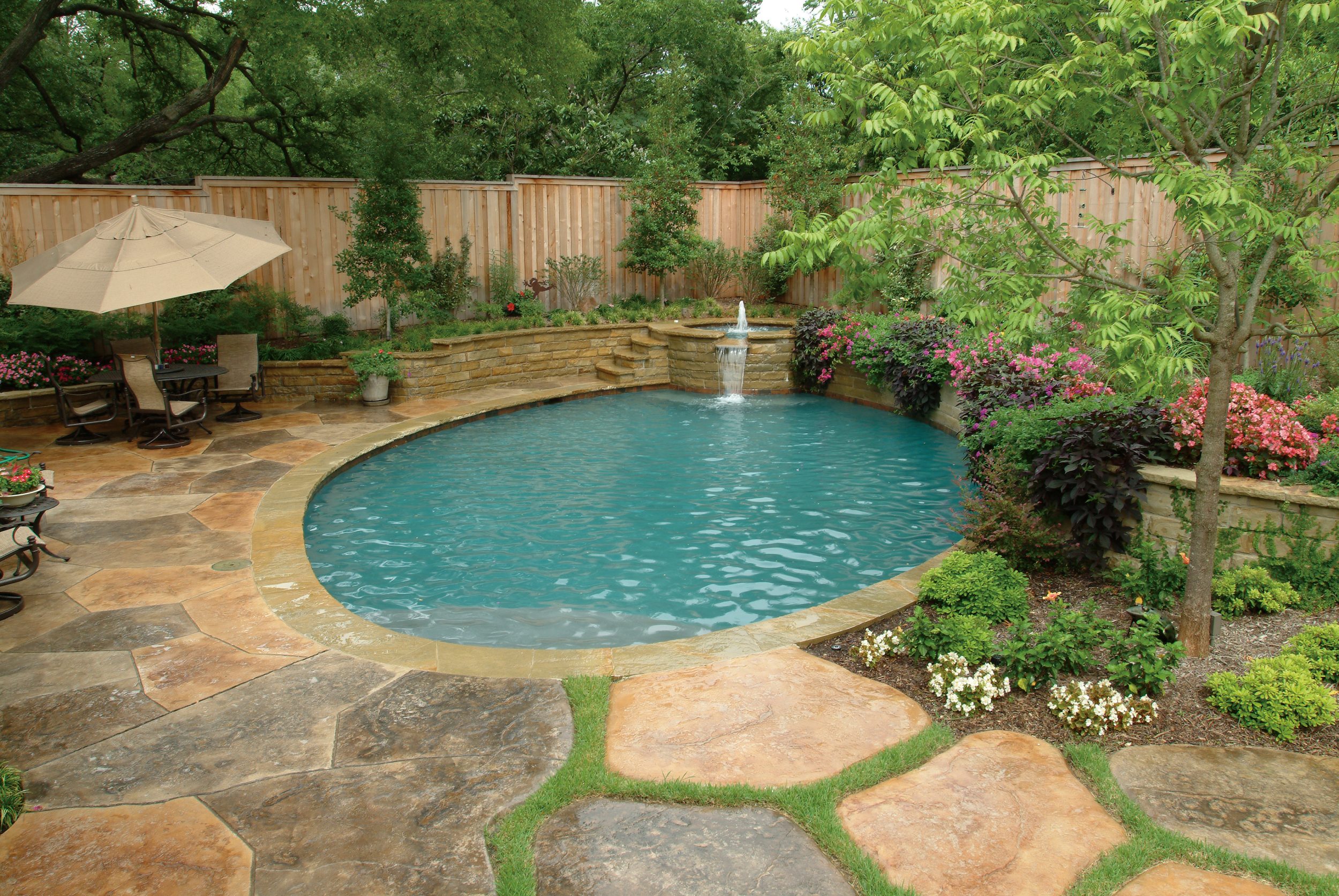
 Stamped concrete (also known as textured concrete, decorative concrete, imprinted concrete, impression concrete) is concrete that is created to simulate brick, slate, flagstone, stone variations, tile and wood patterns. Stamped concrete is created by pouring and smoothing out concrete, then allowing it to set until it is able to hold an impression. A pattern is then imprinted in the concrete with a “concrete stamp” made of polyurethane. Stamped concrete can be used to enhance pool decks, walkways, driveways, entryways, patios and courtyards.

Stamped concrete can be colored in a number of different ways including integral/integrated colors, antiquing release colors, color hardeners and tinted sealers.
- Integral or Integrated colors are mixed into concrete before it is poured and have the advantage of being consistent throughout so that if the concrete is ever chipped or scarred, the color appears the same.
- Antiquing release colors are accent colors applied to the surface before stamping that prevent the stamp from sticking to the concrete but also accent color in the grooves and crevices of the stamped design.
- Color hardeners are applied to the surface of concrete. They are not recommended for climates that change rapidly due to what is called the “popcorn effect” where small circles “pop out” of the surface of the concrete.
- Tinted sealers have a transparent color tint added and come in a wide variety of colors.

One final note on stamped concrete; because stamp selection and color application play such an important role in the final outcome, stamped concrete done correctly is truly an art. I have seen poorly done stamped concrete applications as well as beautiful examples. For best results, be sure to visit and look at examples of actual work done before choosing a contractor.